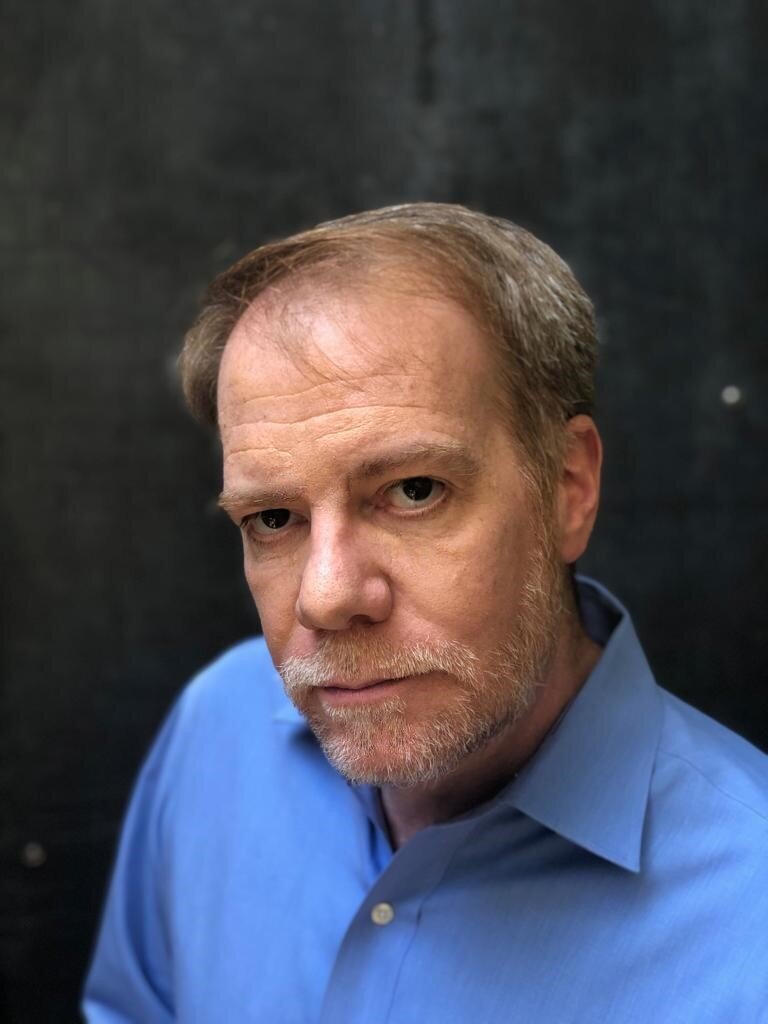
Philip Kennicott is culture critic of The Washington Post where he writes frequently about architecture, film, museums and general cultural subjects. He is also a monthly columnist for Gramophone and a frequent writer, speaker and blogger on the arts. This website, intricately linked to his day job, is a platform for things too long, too short or too odd for newspapers or magazines. Welcome. We’ve made subscription easy, and welcome your comments. To access the complete blog, just click on the banner, above.

What a pleasant surprise to find your new (?) blog.
The review of the WNO Turandot is really excellent; my wife and I will being seeing it tomarrow. Your comments are very helpful. I agree, Sabina Cvilak is a wonderful singer/actor — hope WNO will bring her back often.
Good luck in your blog. I hope you and Anne Midgette will hyperlink each other in the future.
Mr. Kennicott – Thank you for your 11/9/11 WaPo comment on Occupy DC in our McPherson Square. I found it brilliant, and appreciate the links you provided to Situationists, etc. A provoking piece in all the best senses. The comments on the WaPo site were troubling – I had hoped urbanists would engage with the ideas you introduced about urban connectivity generated from the grassroots. But alas. Instead, evidence of the – to me curious – rage that Occupy inspires in some. In any case – the article prompts me to begin looking for your byline. Thank you for this good tickle of a read.
I agree with you Bell Clement! Kennitcott – you have a new fan as it is clear that you are a THINKING JOURNALIST (unfortunately a rarity these days)! I will look forward to reading your articles. And yes.. linking the Situationists DEFINITELY CAUGHT MY EYE! Thanks again.
What a great blog, its a pleasure to read. Thank you!
Pingback: Coming to SILVERDOCS « Philip Kennicott
what a wonderful feature on style for the current opera news–a model of the kind of think piece that the magazine (and readers like me) needcharles riley
Are you serious about this Obama Joker poster being about race? You have to be joking. Your argument is a looooong stretch at best, but only reveals your and the left’s obsession with race. Get over it. It’s not about his race. It’s about his politics. He’s marching this country down a Marxist path that threatens the individual and his liberty; the individual liberty upon which this country was built. It would be the same if Obama was the whitest whitey that ever was. It was the same when George Bush started this statist nonsense. Obama’s policies = bad for the country and for individuals who have to live under them, excluding Obama and Congress, of course.
Adam Frank….It’s clear that you know nothing about Marxism, liberty, or the relationship between Obama and the current Congress. Other than that, yours is a thoughtful comment.
although you have nice hair, perhaps a more stylish cut, and definitely lose the goatee, it looks kinda silly.
and the lime green shirt, meh…
kinda boring.
you could look better with a makeover, imho
Pingback: Critic sees racism in poster of Obama as Heath Ledger Joker | A Conversation about Race | STLtoday
Great blog! Can’t believe I just found it.
Was Neo From Aug 6 serious?!! Why would anyone be so self important to think their opinion matters about someones looks? ugh
Curious what you think about the bass-baritone Mark S. Doss (www.msdoss.com) The artist not the website.
Phil,
If word hadn’t gotten to you yet, Dan Dinicola passed away.
http://www.cbs6albany.com/news/dan-1272291-son-dinicola.html
(Robin Hackett and I thought you’d want to know.)
Philip,
Just read your New Republic review of “Why Mahler?’
Wonderful. We still miss your reviews at the Post.
John Hilliard
Composer
John,
Great to hear from you. I do still write about music, just not on a daily basis… thank goodness. Hope all is well with you.
Every time I feel really bad about what’s happening in or to America it seems I stumble on something that wipes at least some of my fears away. Such a find was The New Republic and in particular your review of Lebrecht’s Why Mahler. When I finished the book, I immediately sat down to write down my feelings about it (I used to be a music critic and I still am a great lover of Mahler’s music). Then I found your review and it was no longer necessary. You had said it all. I suspect this book will destroy Lebrecht’s credibility as a critic/judge/executioner once and for all. It certainly should. Thank you.
As a history of decorative arts grad student, I truly enjoyed your article, “A Victorian Fantasy, in Stone.” I typically notice the sets of period films and television series just as much as the storylines, so it was great to read an article which explained the history of such an evocative house. As you mentioned, the Victorian anti-Classicist romanticization of things Gothic and Elizabethan is manifest in Highclare Castle, which one could easily mistake for a 16th-century creation. Although Gothic and Elizabethan Revival architecture did not resonate as much among Victorian Americans, (they seemed to prefer Gothic furniture to Gothic dwellings), we have do have such grand exceptions as the Smithsonian Castle. As a backdrop to “Downton Abbey,” thank you for shedding light to the viewers of Downton Abbey on a structure which, while not actually built in the sixteenth century, represents the Victorian romanticized view of the time of Shakespeare and “Good Queen Bess.”
Hi,
I read your review in the Washington Post about the current Philip Guston show at the Phillips Collection and it left me rather puzzled. You seem to imply that Guston ran out of gas and you doubt that his shift to the figurative was a revolution. This prompts me to ask you 3 questions:
According to you, there is “too much of Guston” in those paintings. Yet, didn’t Picasso say that every painting is a self-portrait?
How does the obvious formal link between his late figurative paintings and the earlier abstract ones precludes his 1970 shift to the figure from being a revolution?
How many “revolutions” does it take to be a great artist and do you expect an artist to constantly renew himself (if my understanding of the last lines of your review is correct)?
Dear Philip,
I’ve just read your sensitive appreciation of the late John Steane in the June 2011 issue of Gramophone magazine. You say that you may not ever have met him and that this was probably a good thing, since you prefer to retain your imagined view of him. Actually, I don’t think you would have been disappointed.
It was my good fortune to be educated at Merchant Taylors’ School, where -even though I had chosen to pursue sciences- I was taught English by JBS for a year. This would have been about 1969/70.
John Steane was a very nice man, whose lessons were always lively and interesting. He threw himself into the cultural life of the school, playing the organ on occasion and usually directing any school play. He had a puckish energy about him and a good rapport with schoolboys. Even for a Philistine scientist, his was undoubtedly a civilizing influence.
Good morning,
Your essay in the 11/21 Post re UC Davis and the use of pepper spray was excellent. It is somewhat of a rare pleasure to read a well-thought out and well written article in the Post. Like others who commented on your page, I look forward to following your articles.
Much thanks
Steve S